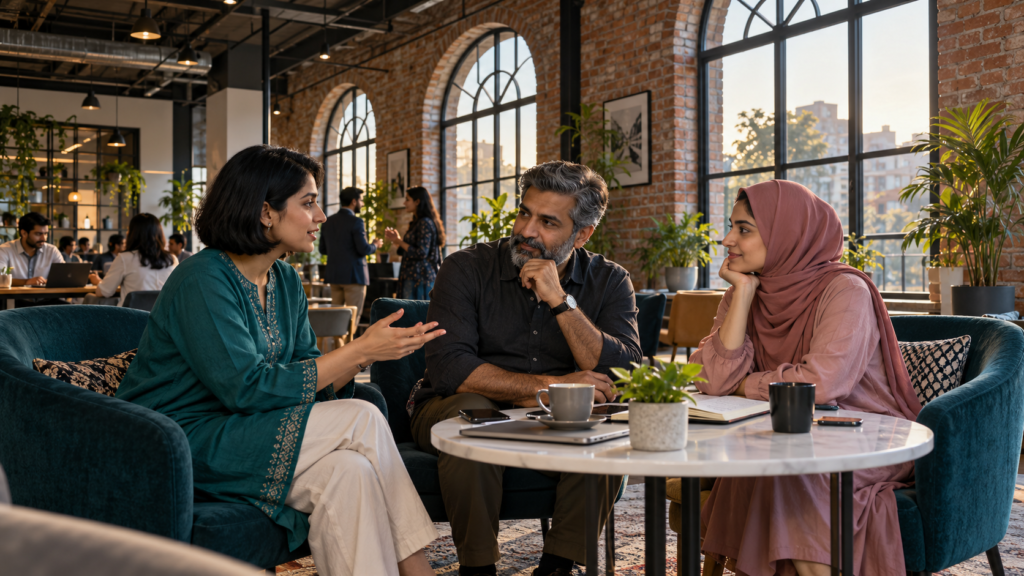
The way we work is evolving, and coworking spaces are at the forefront of this transformation. In Pakistan, coworking spaces are gaining momentum as professionals and businesses seek flexible, affordable, and community-driven solutions. Here’s why coworking spaces represent the future of work in the country:
1. Flexibility and Affordability
Traditional office setups often require long-term leases and significant upfront costs, which can be burdensome for startups, freelancers, and SMEs. Coworking spaces eliminate these barriers by offering flexible membership plans—whether you need a desk for a day or a private office for a year—at a fraction of the cost.
2. Support for Startups and Entrepreneurs
Pakistan’s entrepreneurial ecosystem is growing rapidly, with startups emerging in tech, e-commerce, and other sectors. Coworking spaces provide these businesses with the infrastructure they need without the overheads of traditional offices. Many spaces also offer mentorship, networking opportunities, and access to investors, further boosting their chances of success.
3. Boosting Productivity and Collaboration
Working from home can lead to distractions and isolation, while traditional offices may lack the vibrant energy of a creative environment. Coworking spaces strike the perfect balance by fostering a collaborative atmosphere where professionals can share ideas, seek advice, and innovate together.
4. Access to Technology and Resources
Modern coworking spaces are equipped with high-speed internet, meeting rooms, printing facilities, and other essential amenities. Some even offer advanced tech solutions like video conferencing tools and podcast studios. This access to resources makes them a hub for productivity and innovation.
5. Networking Opportunities
Coworking spaces bring together professionals from diverse industries, creating organic opportunities for networking and collaboration. Regular events, workshops, and community activities further enhance connections, making it easier to find clients, partners, or mentors.
6. Adapting to Hybrid Work Models
With global trends shifting toward hybrid work models, companies in Pakistan are following suit. Coworking spaces offer the perfect solution, providing remote teams with a professional environment to work from as needed, without committing to full-time office leases.
7. Empowering Women in the Workforce
In Pakistan, coworking spaces are playing a crucial role in empowering women by offering safe and professional environments to work. These spaces encourage female entrepreneurs and freelancers to pursue their careers confidently, contributing to greater gender diversity in the workforce.
8. Sustainability and Urban Development
Coworking spaces make efficient use of urban real estate by accommodating multiple businesses under one roof. This reduces the environmental impact of constructing individual offices and supports sustainable urban growth.
Conclusion
As Pakistan’s work culture continues to evolve, coworking spaces are becoming essential hubs for productivity, collaboration, and innovation. They cater to the diverse needs of freelancers, startups, and established businesses while fostering a sense of community. Spaces like The Central in Lahore are leading the charge, providing a glimpse into the future of work.